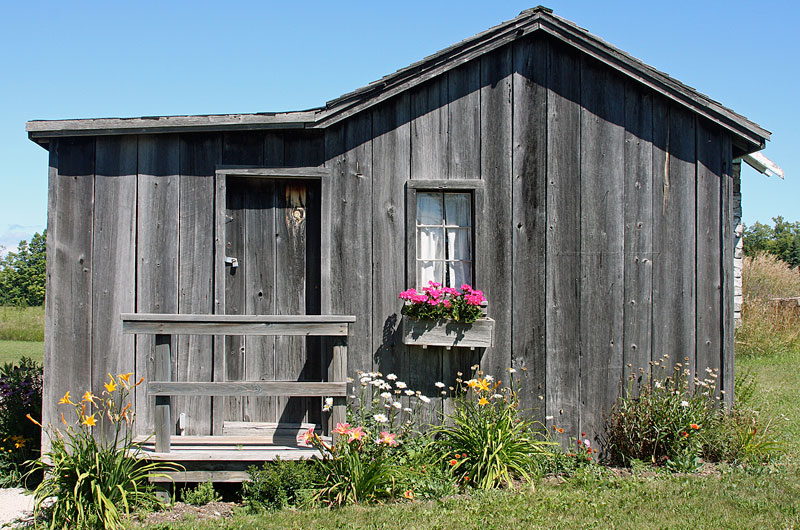
Cherry orchards became a signature feature of the Door County landscape beginning in the early 1900s. Migrant laborers helped pick the cherries until mechanical tree shakers were developed in the 1960s. The pickers came from all over — native Americans from nearby areas, individuals and families from the Deep South and Mexico — and in
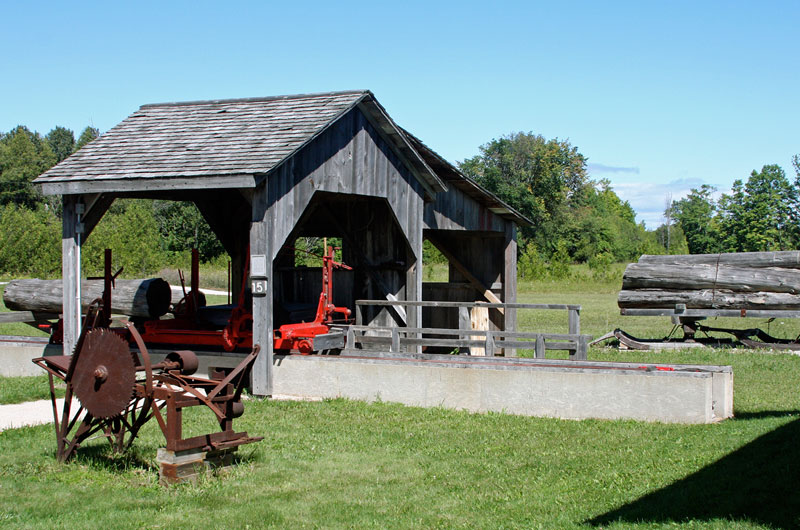
Logging and the lumber industry were staples of the early economy in Sister Bay. There was a major sawmill on the waterfront in Sister Bay, but some farmers also maintained their own mills to provide lumber for themselves and their neighbors. This 100+ year old sawmill belonged to Hjalmar Holand, noted Door County historian and
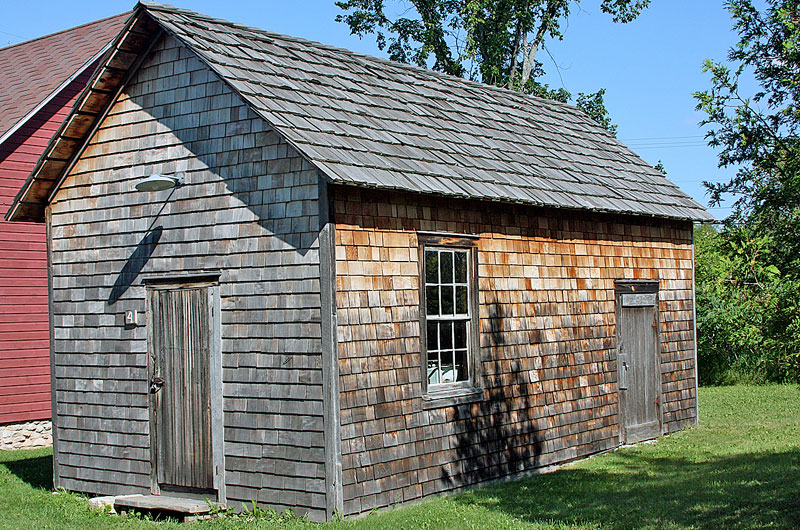
A summer kitchen was the site of a farm wife’s baking, canning and preserving, butter churning and egg sorting. It served to keep the heat of these chores out of the main house. This building, also over 100 years old, was originally located on the Knutson farm on Beach Road. It was disassembled and rebuilt
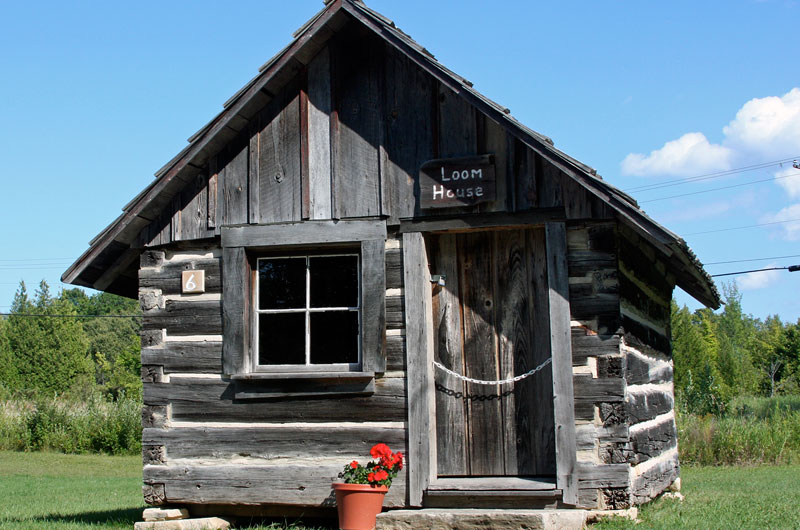
This log cabin was typical of the spartan housing built by early pioneers in Door County. Cabins like these sometimes served as shelter while the settler was clearing land to build a farm house. Local master craftsman Don “Yukon” Erickson restored the cabin for his wife Judy’s weaving hobby, which resulted in the name that
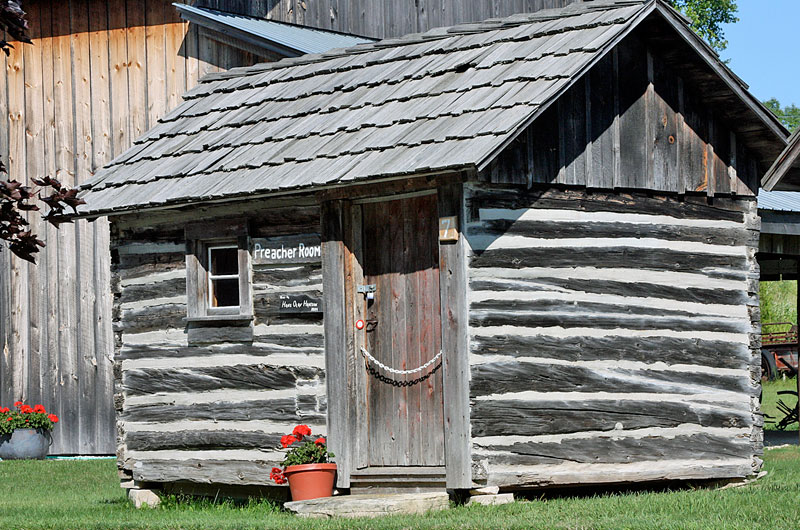
Like the Loom House, this cabin was an example of early Door County housing. It was built in 1884 by an early Swedish immigrant, Hans Olaf Hanson, in the Appleport area east of Sister Bay. Don Erickson also restored this cabin. Don was fond of the old Appalachian lifetstyle, so he named this cabin in
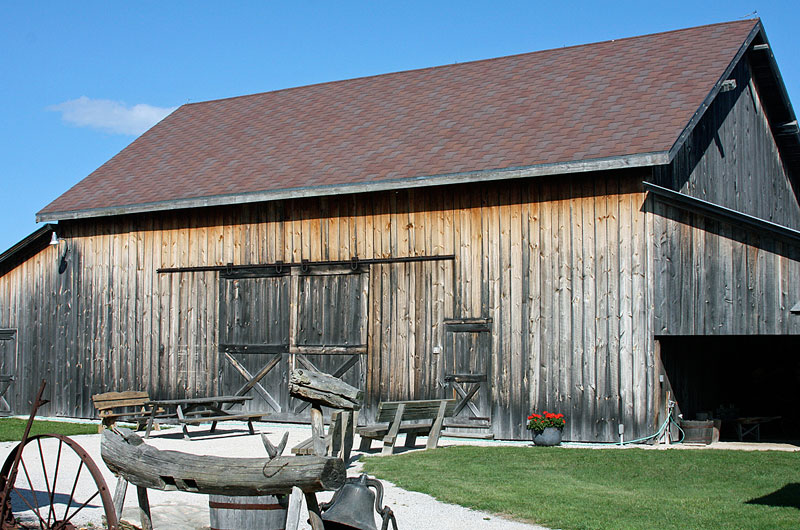
The Koessl family owned a farm for nearly 100 years near today’s intersection of Highways 42 and 57, where the Birchwood Lodge is now located. This barn from their farm, built in 1887 by the property’s former owner, served early on as a livery stable for stagecoach horses, and was used by the Koessls for
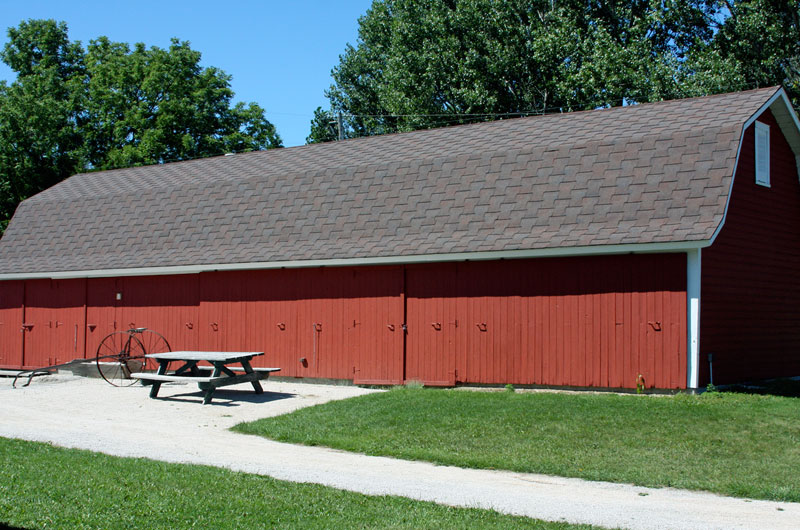
This shed was built in the 1950s and came from the Koessl farm. It was used to house farm equipment and to serve as a repair workshop. It now includes a tool room, and many displays and pictures of the people and businesses of old Sister Bay.
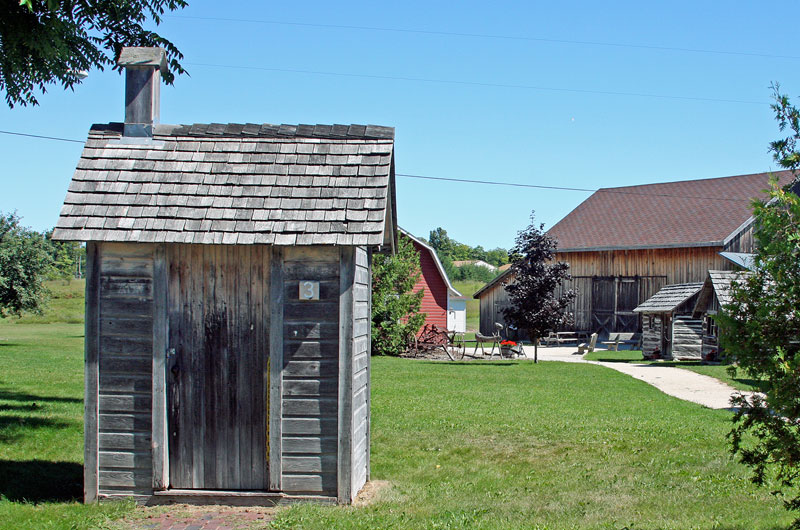
The Anderson House would have had an outhouse, but this one, which is over 100 years old, was brought here from the nearby Charney farm on Fieldcrest Road
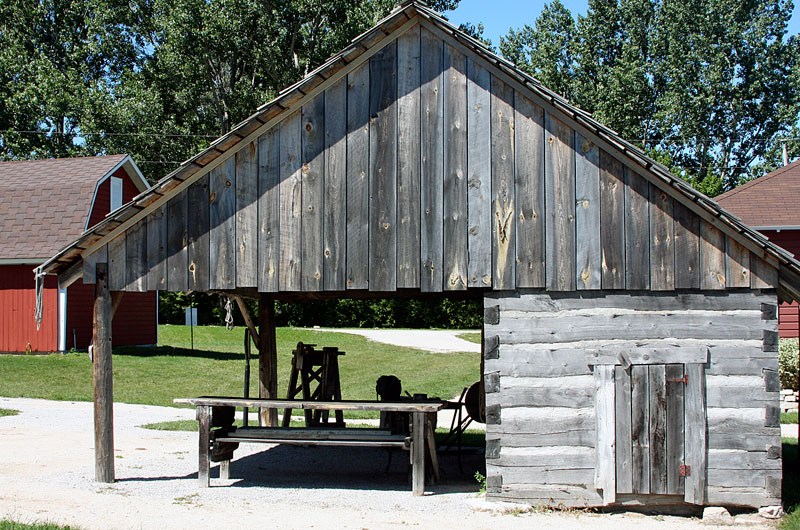
The blacksmith was an essential craftsman in the era of horse-drawn carriages, wagons and handmade tools. Emma Anderson’s father was a blacksmith who had a shop just across the road from the Anderson House, and Emma’s husband Alex may have also done some work of this type. This shop is a replica, built by local
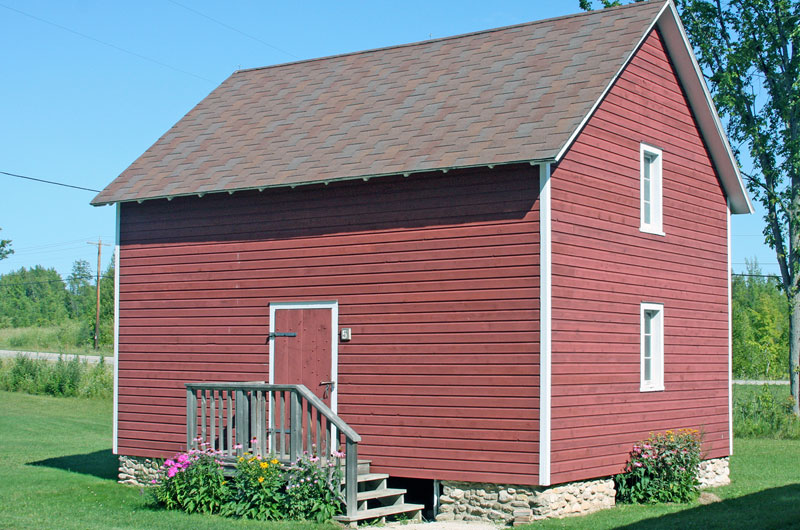
This granary was on the farm that Emma and her sister inherited from their father, and it was just up the road from the Anderson House, so Emma is likely to have spent time here. The family’s farm crops were stored in this building. The granary was donated by Willard and Clessie Kramer, who had
Corner of the Past is now closed for the season. We look forward to your visit next summer!

Phone
920-854-7680
Social
Newsletter Signup
SBHS Mailing Address
PO Box 34
Sister Bay, WI 54234
SBHS Physical Address
10310 Fieldcrest Rd
Sister Bay, WI 54234
SBHS Email Address
sisterbayhistoricalsociety@gmail.com
© 2026 • All Rights Reserved • Sister Bay Historical Society
Website by Door Guide Publishing and Heydayv Design